Aron
The Tattooist of AuschwitzAron is a minor but pivotal figure in Lale Sokolov's account of survival at Auschwitz. He first appears as a nameless young man wedged against Lale on the cattle train, and he is last heard of as a casualty of the camp's arbitrary violence — a man whose small act of loyalty to Lale costs him his life. Though he appears only briefly in the narrative, Aron's fate crystallizes the brutal arithmetic of the camp, where a single lie told to protect a friend can be punished with death, and where the difference between life and death often rests on the whim of a kapo.
Identity and Introduction
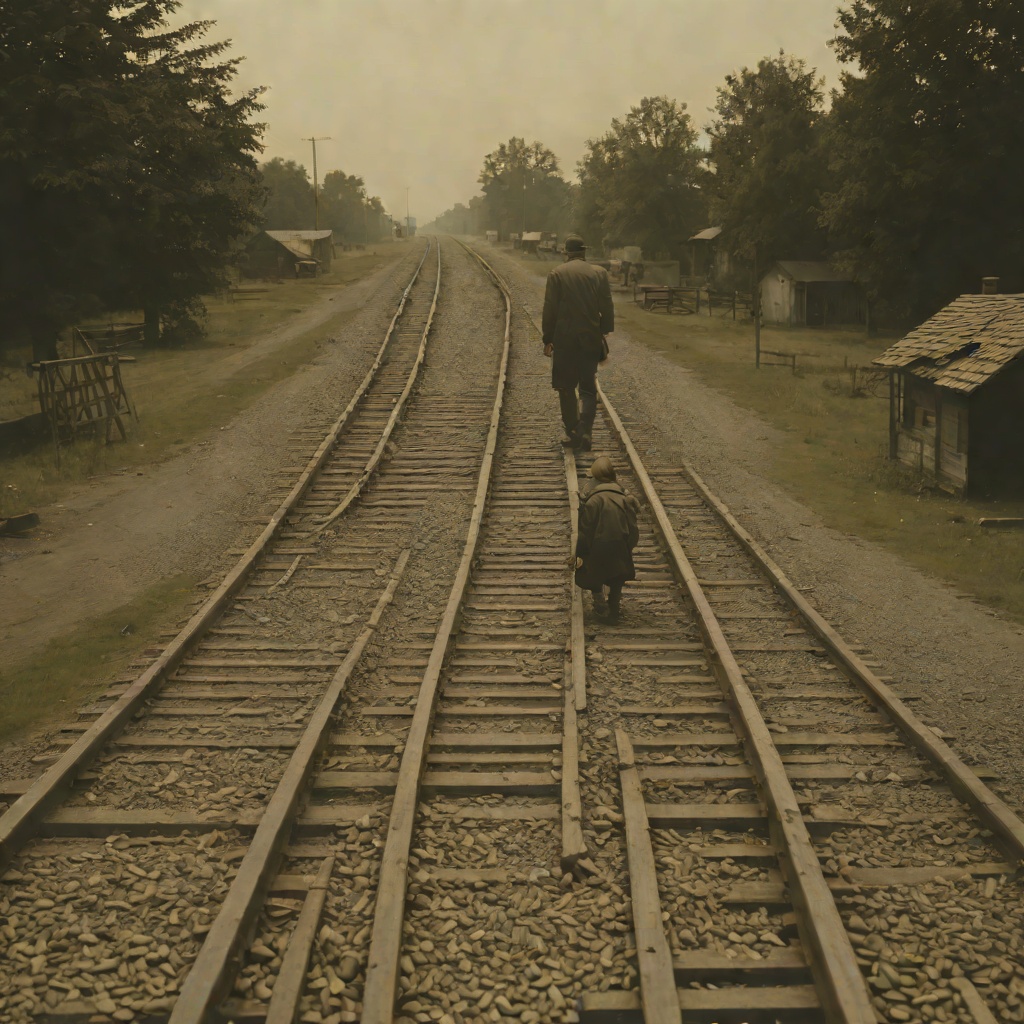
Aron is introduced during the journey to Auschwitz in April 1942, when Lale, a twenty-five-year-old Slovak Jew, is packed into a cattle wagon with countless other young men. The wagon is less than ten feet wide, and Lale cannot see the end to gauge its length; he tries to count the men but gives up as heads bob up and down. Aron is the man beside him, his shoulder wedged into Lale's chest, his hair smelling of oil and sweat. When a young man with a pale face and balled-up fists suggests they try to overpower the guards since they outnumber them, Lale dismisses the idea with a practical question: "We have fists, they have rifles—who do you think would win that fight?" The young man falls silent, his hands dropping limply by his side, and then introduces himself: "I'm Aron." Lale replies simply, "Lale." The exchange marks the beginning of a bond formed in the shared fear, youth, and religion that the other men around them also carry, though they sink back into their own silent reveries.
Life in the Camp and the Death Cart
Aron's presence in the narrative is sparse but significant. When the train arrives at its destination, Lale turns to see Aron at his side and tells him, "The end of the line, I'd say," a remark that makes Aron's face fall. Later, Aron becomes entangled in Lale's struggle with illness. At some point Lale falls sick, and the kapo cannot find him. A man later explains to Lale what happened: "Aron could have told him you were ill, but he feared the kapo would add you to the death cart again if he knew, so he said you were already gone." The kapo, however, discovered the truth — or at least was so enraged that he could not find Lale — and "he was so pissed off, he took Aron anyway." This is the last mention of Aron in the narrative; his fate is sealed by the kapo's wrath, a punishment meted out not for any crime but for the simple act of shielding a friend.
Sacrifice and Consequence
Aron's death is a direct consequence of his loyalty to Lale. By lying to the kapo, Aron hoped to spare Lale from being added to the death cart, a fate that would have meant certain death. Instead, the kapo's fury was redirected at Aron himself. The narrative does not describe Aron's death directly; it is reported secondhand by an exhausted man who yawns as he delivers the news. This offhand delivery underscores the grim reality of the camp, where death is so routine that it is reported with the same fatigue as any other piece of information. Aron's sacrifice is never acknowledged by Lale in the text, and no further mention is made of him, leaving his fate as a quiet, unremarked tragedy in the larger story of survival.
Thematic Significance
Aron's brief arc embodies the camp's logic of arbitrary violence and the moral complexity of survival. His lie to the kapo is an act of selfless friendship, yet it results in his own death rather than Lale's. The episode illustrates the precariousness of life in Auschwitz, where even a well-intentioned deception can have fatal consequences, and where the kapo's power is absolute and unpredictable. Aron's fate also foreshadows the many other losses Lale will endure — the friends, family, and fellow prisoners who do not survive — and it stands in stark contrast to Lale's own survival, which is often aided by luck, privilege, and the help of others. In this sense, Aron is a reminder that survival in the camp was not solely a matter of merit or courage, but also of chance and the willingness of others to risk themselves on one's behalf.